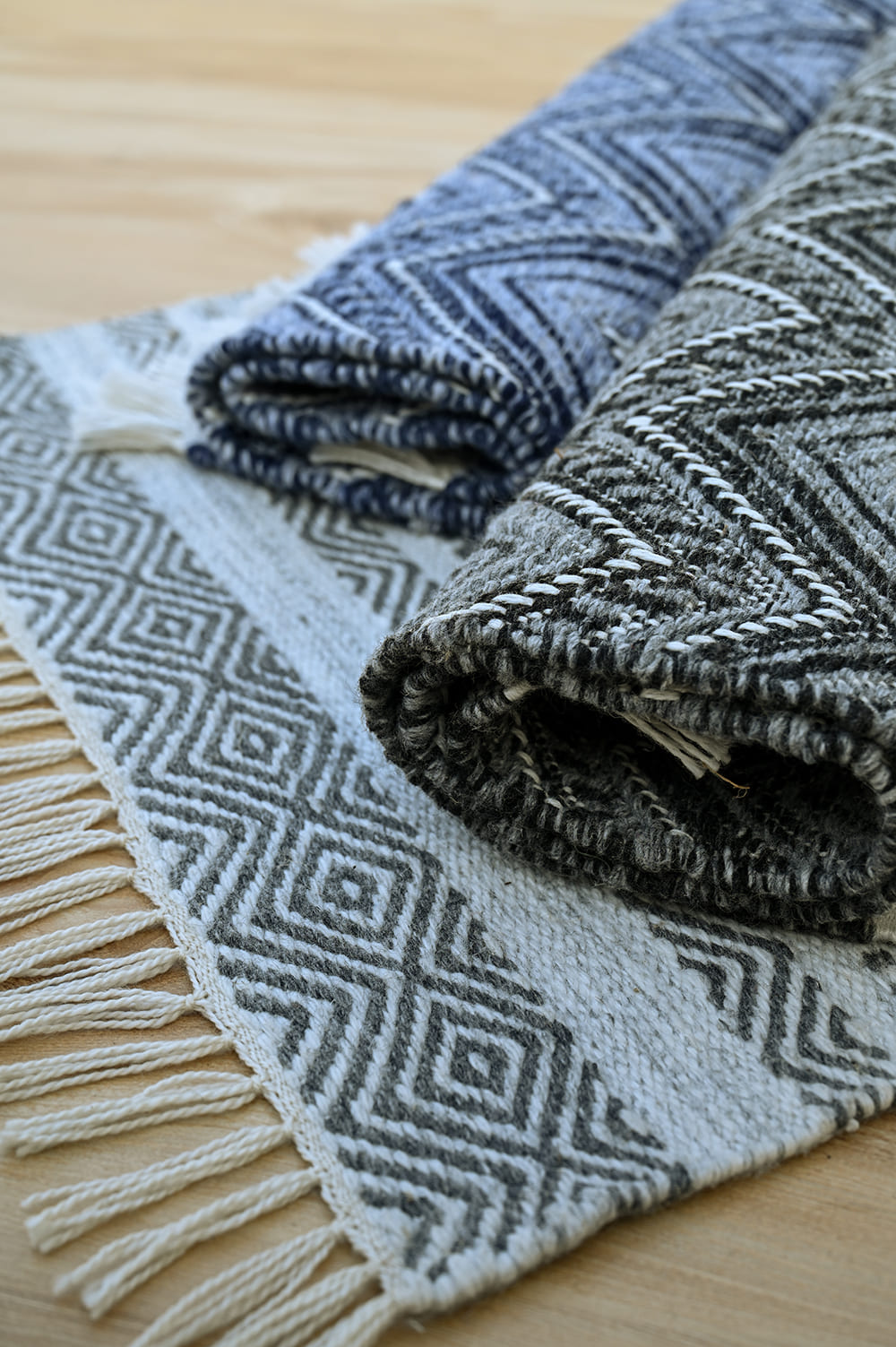
Before a rug reaches your home, it passes through more pairs of
hands than most people realise. It begins not with a product or a pattern, but
with a person. Someone who wakes up early, walks to a loom, and spends their
day doing something that takes years to learn and a lifetime to master.
This is a story about one of those people. It is a story about the
craft of hand weaving, the rhythms of a working day in our workshop, and what
it means to spend your life making something with your hands.
We have changed certain details for privacy, but everything you
read here reflects the genuine experience of the artisans who make every Rugs
by Hand piece.
Before the Loom: The Morning Routine
Ramesh wakes up at six in the morning. He has done this for over
twenty years, long enough that his body no longer needs an alarm.
He lives a short walk from the workshop. On most mornings, he
stops at a small tea stall on the way in, drinks a glass of chai, and exchanges
a few words with whoever else is heading to work. The city is quiet at this
hour. The looms are not yet moving.
He arrives at the workshop by seven. The first thing he does is
check the loom he left the previous evening, running his fingers along the last
row of knots to feel the tension. He has been doing this long enough that he
can tell by touch whether the weft is even, whether a knot is slightly loose,
whether the row needs attention before he continues.
Most days, it does not. But he checks anyway. That is what twenty
years teaches you.
The Loom: Understanding the Tool
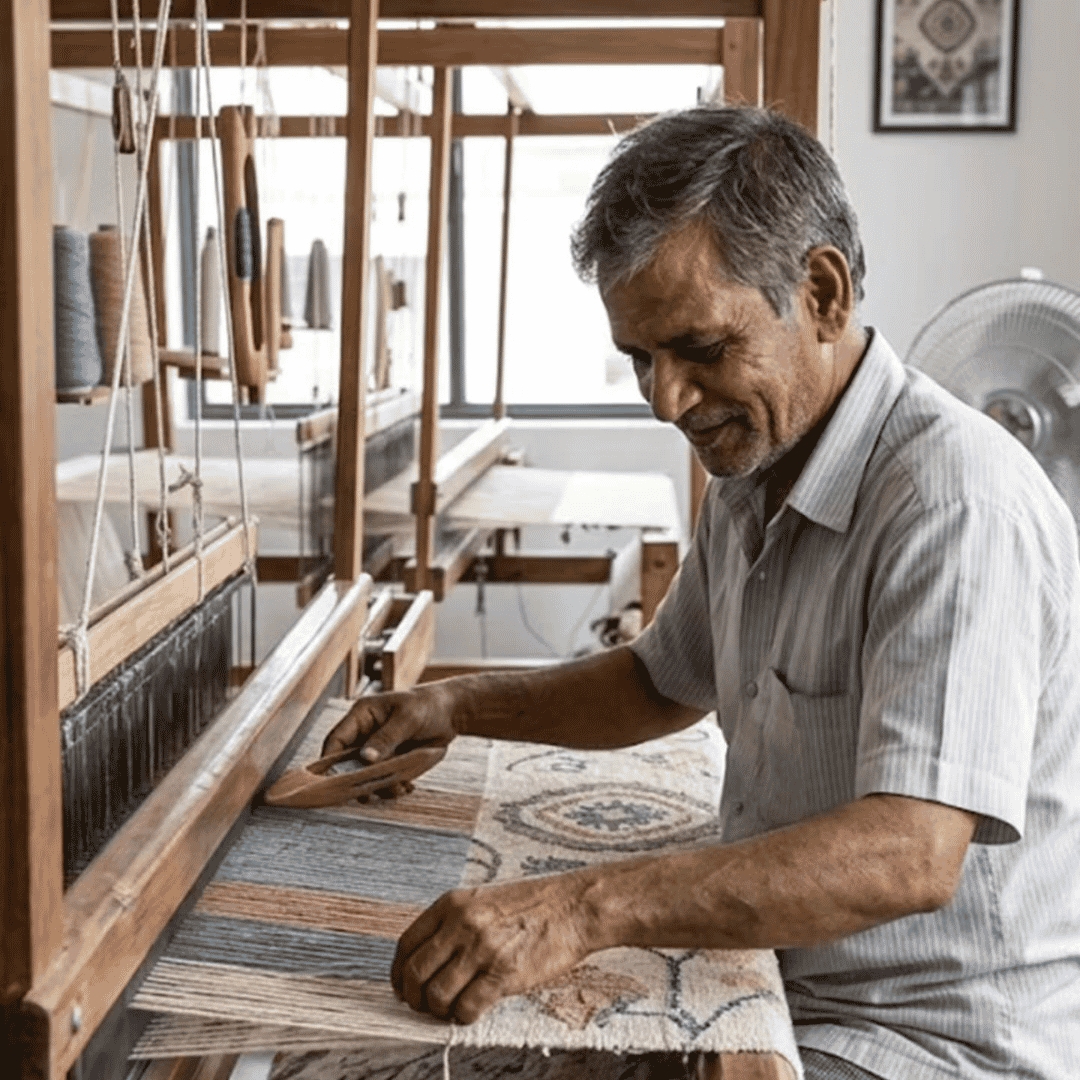
The loom Ramesh works at is a vertical frame, made of wood, fixed
to the floor and the ceiling. The warp threads, which will form the structural
backbone of the rug, are stretched vertically from top to bottom under tension.
They are so fine and so numerous that from a distance the loom looks like a
waterfall of thread.
The design Ramesh is working from is a paper graph, called a
naksha, placed beside him on a stand. Every square on the graph corresponds to
a single knot on the rug. The colours are coded. He has memorised most of the
pattern by now but still glances at it regularly, particularly at the edges of
colour transitions where accuracy matters most.
His tools are simple: a knife for cutting the yarn after each
knot, a comb-like beater for compressing each row of knots downward before
moving to the next, and scissors for occasional trimming. He has used the same
knife for eleven years. The handle has worn to the shape of his grip.
The Work: Knot by Knot
The knot Ramesh ties is called a Persian knot, also known as a
Senneh knot. He wraps a length of coloured yarn around two adjacent warp
threads, passes the ends through the space between them, and pulls both ends
forward so they form two tufts of pile. He does this approximately eight
thousand times a day.
Each knot takes roughly three seconds. For someone watching for
the first time, the speed is surprising. The hands move with a fluency that has
nothing to do with thought. The pattern, the colour, the tension, the
placement, all of this has been absorbed so deeply over years of practice that
it no longer requires conscious attention.
Ramesh describes it the way a musician might describe playing a
piece they know by heart. The hands know what to do. The mind is free to
observe.
After every row of knots, he uses the beater to compress them
downward. Then he cuts the weft thread that holds the row in place and begins
again. The rug grows upward on the loom, centimetre by centimetre, row by row.
The Midday Break: Time and Pace
At around one in the afternoon, Ramesh stops for lunch. The
workshop quiets. Most of the weavers eat together, brought food from home or
bought from one of the small dhabas nearby.
The conversation is easy. There is talk of cricket, of family, of
whose rug is coming along well and whose pattern has given them trouble. There
is the kind of comfortable familiarity that exists between people who have
worked alongside each other for years.
After lunch, there is usually half an hour of rest before the
afternoon session begins. The light changes in the workshop during the
afternoon. The windows catch the sun differently. Ramesh says he prefers the
afternoon light for working on rugs with complex colour transitions because the
contrast becomes clearer.
The Learning: How a Weaver Is Made
Ramesh learned to weave from his uncle, who learned from his
father. This is the most common path into the craft. The knowledge passes
between generations within families and within communities, carried not through
formal instruction but through years of proximity and practice.
He began as a child, watching. He was allowed to tie simple
practice knots on a spare loom. By his early teens, he was working alongside
his uncle on real pieces, responsible for sections of the pattern where errors
would be less visible. By his late teens, he had his own loom.
He estimates it took him five years of daily practice before he
felt genuinely competent. Another five before he felt good. He is still
learning, he says, though what he is learning now is different from what he was
learning in the beginning. Earlier, it was technique. Now it is judgment.
Judgment is knowing when a knot is close enough
and when it needs to be redone. Knowing how the pattern will look ten rows from
now and whether a small deviation today will compound into something visible
later. Knowing when to stop for the day because tired hands make mistakes that
careful eyes will catch.