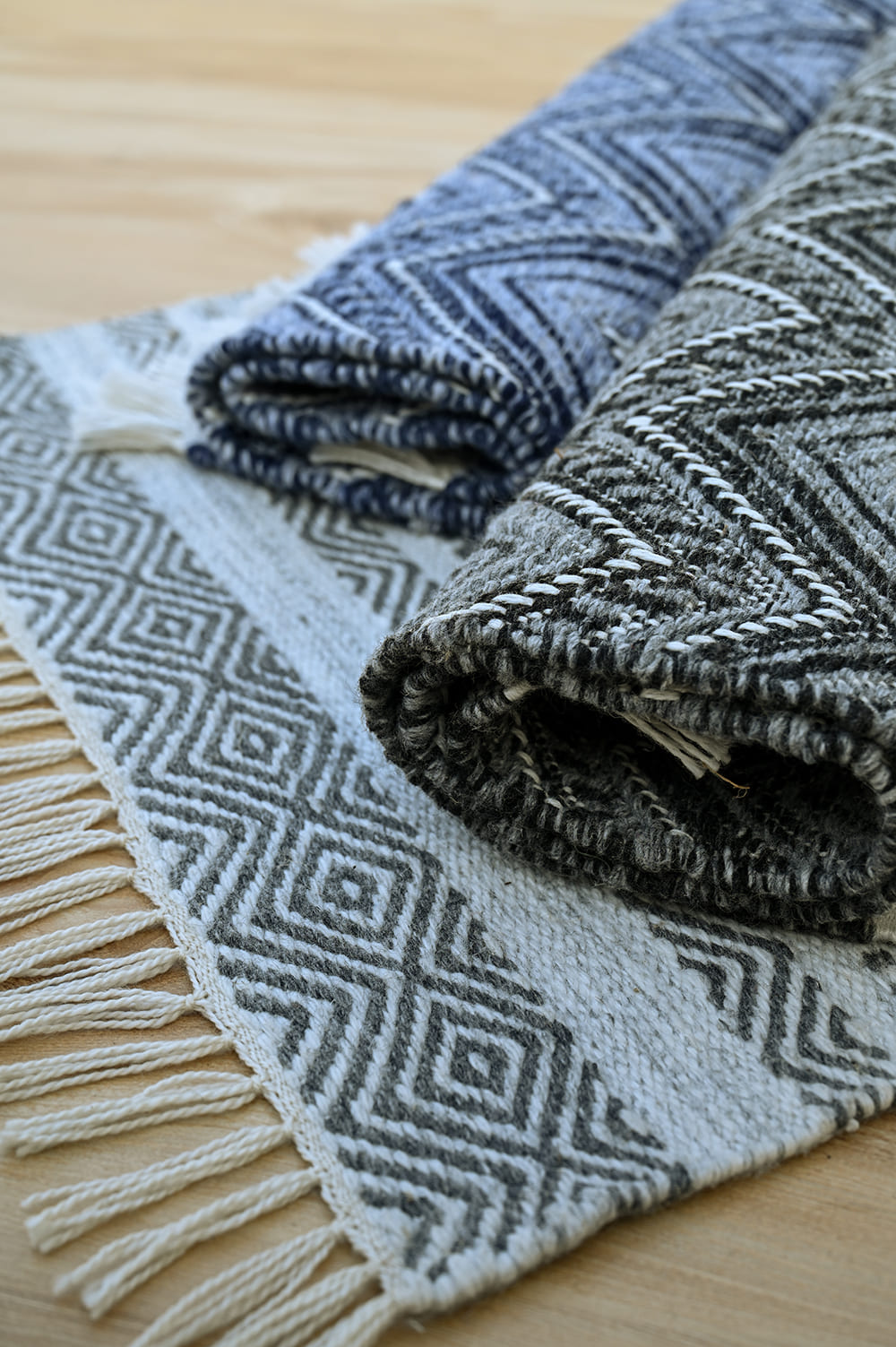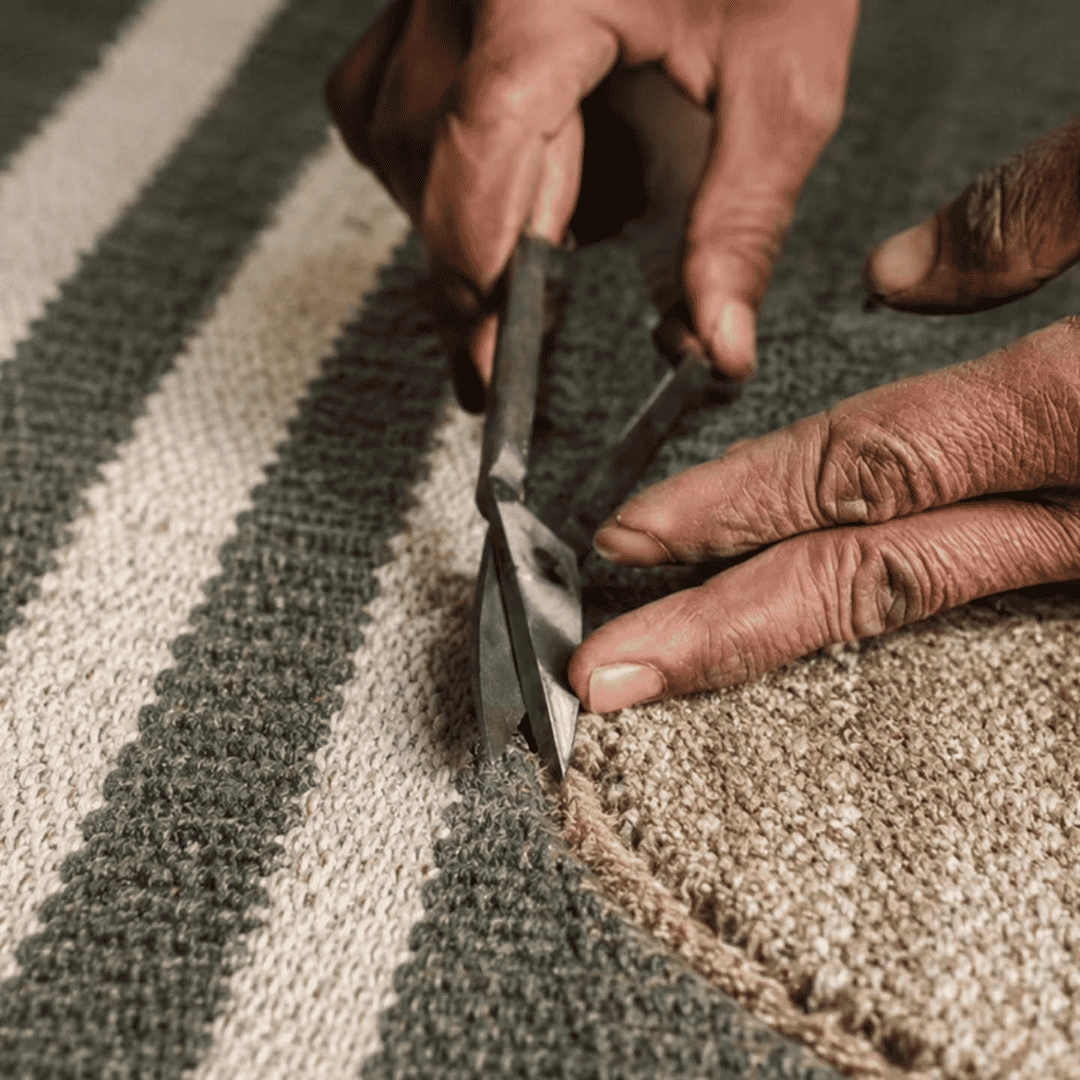
The rug industry has a problem. The word 'handmade' has been
stretched so far that it now appears on products made almost entirely by
machines. Sellers know that buyers associate handmade with quality and are
willing to pay more for it. So they use the word freely, without consequence,
on rugs that have never been touched by a skilled artisan.
The result is that millions of buyers every year spend good money
on rugs that are not what they were told they were. They do not discover this
for months or years, usually when the rug starts to shed, flatten, curl, or
fall apart in ways a genuine handmade rug never would.
This guide gives you ten specific, concrete signs that a rug is
not genuinely handmade. Most of them require nothing more than turning the rug
over and knowing what to look for.
Sign 1: The Back Is Too Perfect
Flip the rug over. This is the single most reliable test for
authenticity.
A genuine hand-knotted rug will show individual knots on the back.
The pattern will be visible but slightly less defined than on the front. There
will be small, natural irregularities because human hands, no matter how
skilled, do not produce machine-perfect results.
A machine-made rug will have a perfectly uniform back with no
visible knots. The pattern will be pixel-perfect with no variation. If the back
looks like it was produced by a printer, it was essentially produced by one.
Sign 2: There Is a Rubber or Latex
Backing
If you feel a rubbery, sticky, or foam-like material on the back
of the rug, it is not hand-knotted. This backing is used in machine-made and
hand-tufted rugs to hold the pile in place because the fibres are not actually
tied to the foundation.
Genuine hand-knotted rugs need no such backing. The knots are tied
directly to the warp threads and the pile is structurally part of the rug
itself. It holds together without glue, latex, or backing material of any kind.
Latex degrades over time. If you have bought a rug with a latex
backing, expect it to start deteriorating within five to ten years regardless
of how well you care for it.
Sign 3: The Fringe Is Sewn On
Look closely at where the fringe meets the body of the rug. On a
genuine hand-knotted rug, the fringe is a direct extension of the warp threads
that form the rug's structural foundation. It grows out of the rug, not onto
it.
On many machine-made rugs sold as handmade, the fringe is a
separate piece of material that has been sewn onto the edge of the rug as
decoration. You can usually see the seam where it is attached. Sometimes you
can pull a fringe thread and feel that it is not connected to anything
structural beneath.
Sewn-on fringe is one of the most common giveaways in
mass-produced rugs sold under misleading labels.
Sign 4: The Pile Height Is
Perfectly Uniform
Run your hand across the surface of the rug. On a machine-made
rug, the pile height will be completely uniform across the entire surface.
Every fibre cut to the exact same length with mechanical precision.
On a genuine hand-knotted rug, there will be very slight variation
in pile height. This is not a defect. It is evidence of human involvement.
Skilled artisans trim the pile by hand after knotting, and no hand trim
produces perfectly identical results across tens of thousands of square
centimetres.
If the surface feels completely uniform, like a fitted carpet, it
was almost certainly produced on a power loom.
Sign 5: The Price Is Too Low for
What It Claims to Be
This is perhaps the easiest sign to recognise, and the most
frequently ignored.
A genuine hand-knotted rug in a 5x8 ft size takes weeks to make.
The artisan must be paid for that time. The materials must be sourced. The
finishing must be done. None of this can happen and result in a rug that costs
Rs. 3,000 or Rs. 4,000.
Here is a simple benchmark: a genuine hand-knotted wool rug in a
5x8 ft size should cost at minimum Rs. 15,000 to Rs. 18,000, and more typically
Rs. 25,000 to Rs. 60,000 depending on knot density and material quality.
Anything significantly below this range is not what it claims to be.
If a rug is labelled hand-knotted and costs what a machine-made
rug costs, one of those two things is wrong. And it is almost never the price.
Sign 6: The Pattern Does Not Show
on the Back
On a hand-knotted rug, the pattern is formed by the knots
themselves. Each knot contributes to the design. This means that when you flip
the rug over, the pattern is visible on the back, though with softer definition
than on the front.
On a hand-tufted or machine-made rug, the pattern exists only on
the surface. The back will show the canvas or latex backing with no pattern
visible. The design is applied to the surface rather than woven into the
structure.
This test works best on rugs with clear geometric or floral
patterns. Abstract or solid-colour rugs are harder to test this way.
Sign 7: It Sheds Heavily After the
First Few Months
Some shedding in the first few months of a new wool rug is
completely normal. Loose fibres from the weaving process work their way out as
the rug is walked on and vacuumed. This is true of genuine handmade rugs and
nothing to be alarmed about.
What is not normal is heavy, persistent shedding that continues
for a year or more. This level of shedding usually indicates that fibres are
not properly secured, which is a characteristic of poorly made tufted rugs
where the latex backing is inadequate or the fibres were not properly anchored
during production.
On a genuine hand-knotted rug, shedding should stop almost
entirely within three to six months of regular use.
Sign 8: The Seller Cannot Tell You
Where It Was Made
A genuine handmade rug has a specific origin. It was made in a
specific workshop, in a specific city, by artisans using specific techniques.
This information exists and any reputable seller should be able to provide it.
If a seller cannot tell you where a rug was made, which region or
country, which technique was used, or who made it, this is a significant
warning sign. Vague answers like 'imported' or 'oriental style' or 'artisan
inspired' are not answers.
At Rugs by Hand, every rug we sell is made in our own workshop by
artisans we know by name. We can tell you the technique, the material, and
exactly how it was made because we were there when it happened.