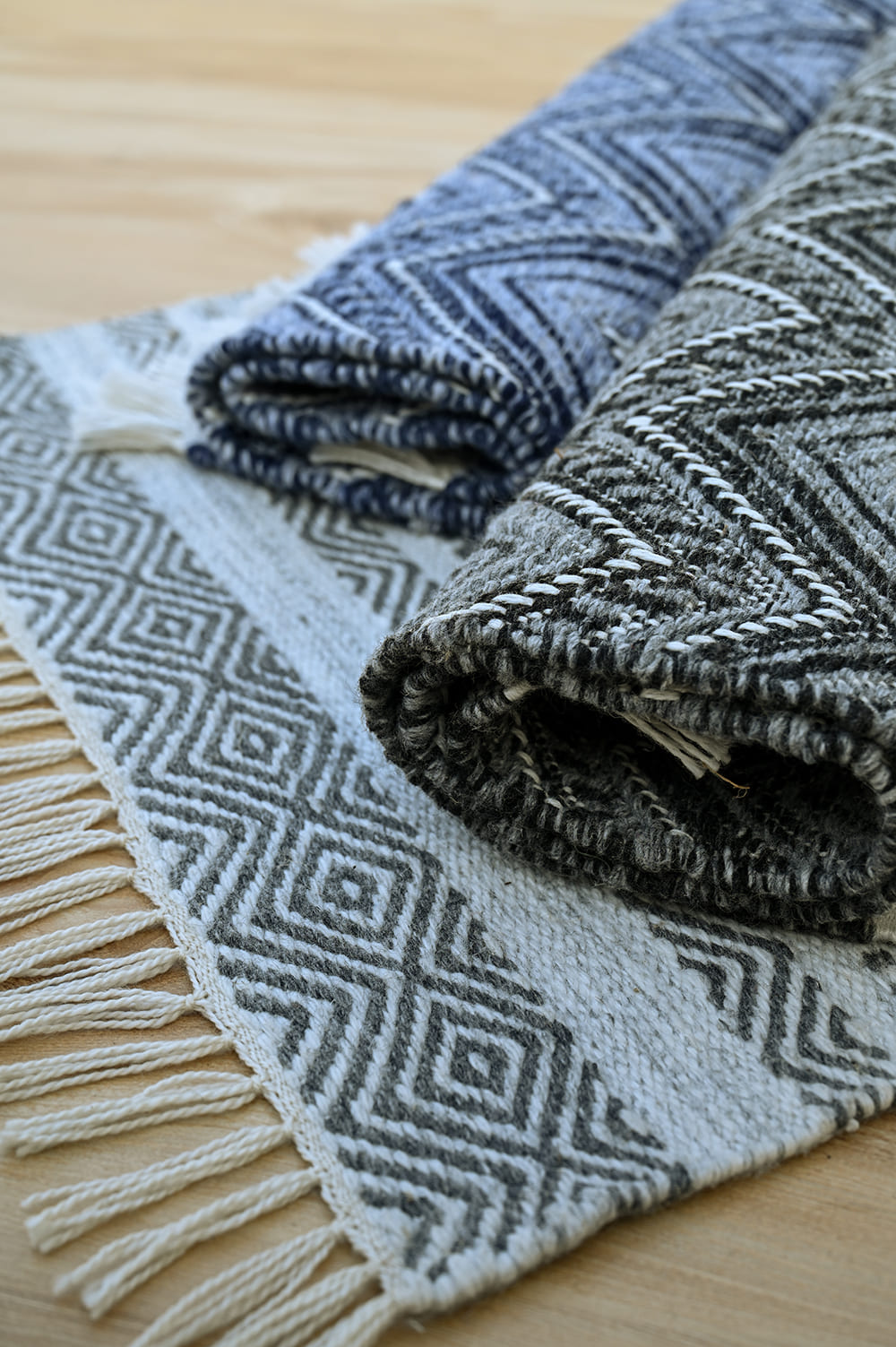
When buying a handmade rug in India, the first question most
people ask is about pattern or size. The question they should be asking is:
what is it made from? The material determines how a rug feels underfoot, how
long it lasts, how it ages, and whether it suits the room you are putting it
in. Get the material wrong and even the most beautiful rug will disappoint you
within a few years.
At Rugs by
Hand, we work with three core materials: premium wool, natural jute, and
recycled PET polyester. Each has distinct qualities, different ideal rooms, and
a different relationship with how you live. This guide breaks down all three in
complete detail so your next rug decision is one you never second-guess.
Before We Begin: What Makes a Rug Material Good?
When
comparing rug materials, there are six qualities that actually matter in daily
life:
•
Durability: how well it holds up to foot traffic and daily use
•
Feel underfoot: softness, texture, and comfort when walked on
barefoot
•
Stain and moisture resistance: how it responds to spills,
humidity, and cleaning
•
Ageing: whether it improves, stays the same, or deteriorates over
time
•
Sustainability: the environmental impact of the material and its
production
•
Ideal rooms: where each material performs best and where it should
be avoided
We will cover
all six for each material.
Material 1: Wool
Wool is the
oldest and most widely used material in handmade rugs. It has been the
foundation of rug-making traditions across India, Persia, Turkey, and Central
Asia for thousands of years. There is a reason it has never been replaced.
Where it comes from
At Rugs by
Hand, we use New Zealand wool and high-quality Indian wool sourced from
carefully selected suppliers. New Zealand wool is particularly prized for its
long fibre length, natural lanolin content, and consistent quality. The wool is
sorted, washed, dyed in-house at our facility, and spun before it ever reaches
the loom.
How it feels
Wool has a
natural resilience that no synthetic material can fully replicate. The pile
compresses under foot traffic and springs back. Over time, wool develops a
natural sheen called a patina, which makes older wool rugs look richer and more
beautiful than when they were new. It feels warm and substantial underfoot in a
way that is immediately noticeable the first time you walk on it.
Durability
Wool is one
of the most durable natural fibres available. A well-made hand-knotted or
hand-tufted wool rug in a medium-traffic area will last 20 to 50 years or more
with basic care. The natural crimp of wool fibre means it bends without
breaking, and the lanolin creates a protective coating that repels dirt and
resists staining.
Stain and moisture resistance
Wool is
naturally stain-resistant. The lanolin in the fibre creates a protective
barrier that gives you time to blot and address spills before they set. Wool
also regulates moisture naturally, absorbing up to 30 percent of its weight in
moisture before feeling damp. This makes it comfortable in humid conditions and
resistant to static. However, wool does not respond well to very wet conditions
or prolonged exposure to moisture at the base of the rug.
Sustainability
Wool is a
natural, biodegradable, and renewable material. Sheep are shorn annually and
the fibre regrows. Well-sourced wool from responsible farms has a significantly
lower environmental footprint than synthetic alternatives. At Rugs by Hand, our
wool is sourced with care for both quality and responsible production.
Best rooms for wool rugs
Wool works
beautifully in almost every room in the home:
•
Living rooms: handles foot traffic well, ages gracefully, anchors
the space
•
Bedrooms: warm, soft underfoot, excellent for the first step every
morning
•
Dining rooms: stain resistance helps with spills, but keep pile
low for chair movement
•
Home offices: comfortable and acoustically absorbent
Avoid wool in
bathrooms or any space with regular water exposure. Prolonged moisture contact
can cause damage over time.
Wool at a glance
•
Lifespan: 20 to 50+ years with care
•
Best for: living rooms, bedrooms, dining rooms
•
Avoid: bathrooms, outdoor spaces, very wet environments
•
Price range: Rs 15,000 to Rs 80,000+ depending on technique and
density
•
Ageing: improves with time, develops natural patina
Material 2: Natural Jute
Jute is one
of India's oldest and most sustainable natural fibres. Also called the golden
fibre, it has been cultivated in India for centuries and is the material of
choice for buyers who want an earthy, textural rug that sits lightly on the
environment.
Where it comes from
Jute is
derived from the stem of the Corchorus plant, grown primarily in West Bengal,
Bihar, and Assam in India. It is harvested annually, requires minimal pesticide
use, and is fully biodegradable. It is one of the most environmentally
responsible natural fibres available anywhere in the world.
How it feels
Jute has a
distinctly different feel to wool. It is rougher and more textural, with a flat
or low weave that makes it feel firm and grounded rather than plush. Some
people find jute slightly rough on bare feet initially, though it softens
slightly with use. The visual texture of jute is rich and earthy in a way that
works beautifully in natural, organic, or minimal interior styles.
Durability
In the right
conditions, jute is a durable material that handles moderate foot traffic well.
However, jute fibres are susceptible to moisture damage. Prolonged exposure to
water or high humidity weakens the fibre and can cause it to rot, discolour, or
develop an odour over time. In dry conditions, a well-made jute rug will last 5
to 10 years with reasonable care.
Stain and moisture resistance
This is
jute's significant weakness. Jute is not moisture-resistant. Spills must be
addressed immediately and the rug must be kept dry. Jute is not suitable for
rooms where spills are common or where humidity is high. Do not use a jute rug
in a kitchen, bathroom, or any outdoor space. In dry Indian climates, this
matters less, but in coastal or monsoon-heavy regions, extra caution is needed.
Sustainability
Jute is one
of the most sustainable materials in any product category. It is fully
biodegradable, requires very little water and no synthetic pesticides to grow,
and sequesters significant amounts of carbon during its growth cycle. If
sustainability is your primary consideration in choosing a rug material,
natural jute rugs are the right choice.
Best rooms for jute rugs
•
Entryways: earthy, textural, handles moderate traffic well in dry
conditions
•
Living rooms in dry climates: beautiful as a layer under a smaller
decorative rug
•
Home offices: firm, low pile, no issues with chair wheels
•
Bedrooms in dry climates: earthy warmth, interesting texture
Avoid jute in
kitchens, dining rooms, bathrooms, or any humid space.
Jute at a glance
•
Lifespan: 5 to 10 years in appropriate conditions
•
Best for: dry rooms, entryways, layering, home offices
•
Avoid: kitchens, bathrooms, humid environments, dining rooms
•
Price range: Rs 8,000 to Rs 25,000 for standard sizes
•
Ageing: develops a soft, worn character over time in dry
conditions
Material 3: Recycled PET Polyester
Recycled PET
is the newest material in our collection and one of the most misunderstood. PET
stands for polyethylene terephthalate, which is the plastic used in standard
water and beverage bottles. Our recycled PET rugs are made from post-consumer
plastic bottles that have been collected, cleaned, processed into fibre, and
then hand-woven by our artisans. It is genuinely sustainable, genuinely
handmade, and genuinely practical.
Where it comes from
Each recycled
PET rug uses hundreds of reclaimed plastic bottles that would otherwise end up
in landfill or waterways. The plastic is shredded, melted, extruded into fibre,
and dyed before being processed into yarn. The manufacturing process uses
significantly less water than cotton or wool production.
How it feels
Modern
recycled PET yarn has improved dramatically in quality. Our PET rugs have a
soft, flat-woven feel that is closer to cotton than to the hard synthetic feel
most people associate with polyester. They are lighter than wool rugs of the
same size, easy to roll and move, and have a slightly sheen that gives them a
clean, contemporary look.
Durability
PET is highly
durable and resists wear well in high-traffic areas. Unlike wool, it does not
shed. Unlike jute, it is completely waterproof. It holds its colour well over
time and does not fade as quickly as natural fibres in direct sunlight. For
practical, everyday use in a busy home, recycled PET is arguably the most
low-maintenance option available.
Stain and moisture resistance
This is where
recycled PET excels. It is completely moisture-resistant and very easy to
clean. Spills bead on the surface rather than absorbing in. A damp cloth
removes most stains with minimal effort. For families with young children,
pets, or anyone who wants a rug they do not have to worry about, recycled PET
is the practical answer.
Sustainability
The
sustainability story of recycled PET is genuinely compelling. By converting
post-consumer plastic waste into a durable, long-lasting product, a recycled
PET rug actively reduces the amount of plastic in the waste stream. However, it
is worth noting that synthetic fibres can release microplastics when washed.
Recycled PET rugs should be vacuumed rather than washed wherever possible to
minimise this.
Best rooms for recycled PET rugs
•
Children's rooms: easy to clean, durable, no shedding, safe for
young children
•
Dining rooms: completely resistant to food and liquid spills
•
Kitchens: waterproof, easy to wipe clean
•
Entryways: handles the highest foot traffic without showing wear
quickly
•
Outdoor-adjacent spaces: can handle moisture and humidity without
damage
Recycled PET at a glance
•
Lifespan: 8 to 15 years in most conditions
•
Best for: dining rooms, children's rooms, kitchens, entryways,
high-traffic areas
•
Avoid: spaces where you want the warmth and depth of a natural
fibre
•
Price range: Rs 6,000 to Rs 18,000 for standard sizes
•
Ageing: holds its appearance well, does not develop patina like
wool